Master Your Lens Sharpness (The Easy Way)
Why Test Your Gear?
Ever wonder which lens in your bag is actually the sharpest? Or maybe you want to know exactly how slow you can set your shutter speed before handheld camera shake ruins your shot.
Here is a simple, repeatable way to test your lenses, camera bodies, and even your own handheld stability.
Equipment
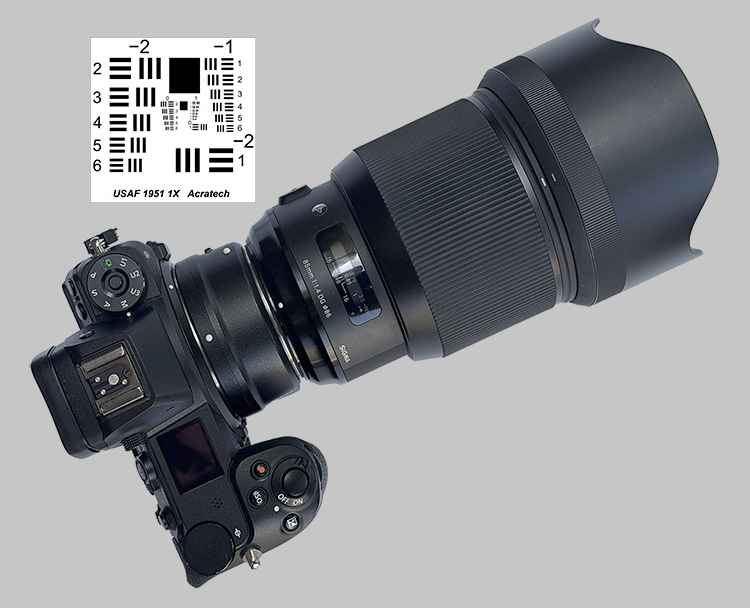
This method is perfect for side-by-side comparisons. For example, if you own a 24-105mm, a 70-200mm, and a 100mm Prime, you can set them all to 100mm and see exactly how they stack up against each other.
-
Step 1: The Chart – I start by printing a high-resolution copy of the 1951 Air Force Resolution Chart. It’s an industry standard, and you can download it for free right here.
-
Step 2: Dimensions & Mounting – Print the chart so it measures 3” x 3” (76mm x 76mm). Tape it to a flat wall at eye level—or lower, depending on your tripod’s maximum height.
The 1mm-to-1" Rule
To get consistent results, we need a precise distance. Use a tape measure to set your tripod so the back of your camera is exactly 1 inch away for every 1mm of focal length.
-
Example: If you’re testing an 85mm lens on a Full Frame camera, set the camera 85 inches from the wall.
-
Note for metric users:
-
This is roughly 25mm of distance for every 1mm of focal length.
Pro Tip for Crop Sensors: To directly compare APS-C to Full Frame, calculate your effective focal length. Multiply your lens focal length by 1.5x (Sony/Nikon/Fujifilm) or 1.6x (Canon). If testing a 50mm lens on a Nikon, use 75 inches (50 X 1.5 = 75).
Dialing in the Settings
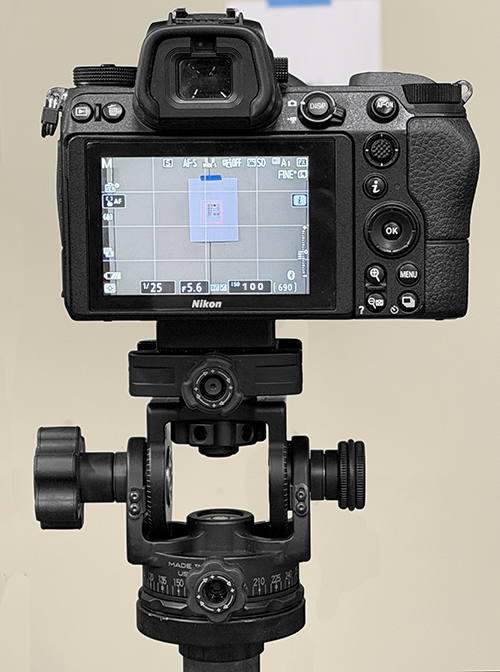
Now, let's prep the camera for the lens performance test:
-
Placement: Center the chart in your frame for the best performance, or move it to the corners to check for edge softness.
-
ISO: Set this to 100 for the cleanest possible image.
-
Aperture: Choose your testing point. f/5.6 is typically the "sweet spot" for absolute sharpness on most lenses.
-
Exposure: Manual Mode is preferred, but Aperture Priority works great too.
- Auto Focus: If your camera / lens has Auto Focus it is best to use it to minimize focus errors.
-
The Secret Tip: Place a Post-it note in the frame write down the lens name and settings so you don't have to hunt through EXIF data later.
Analyzing the Results
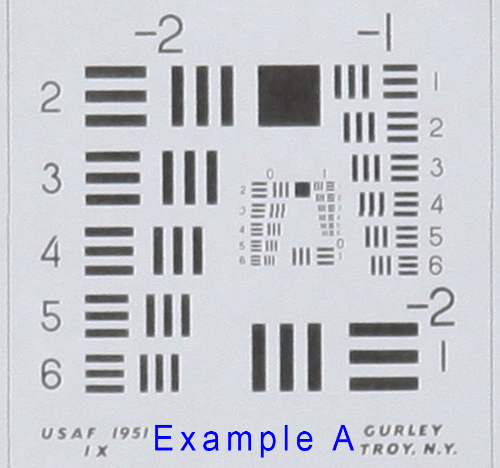
We aren't looking for complex "lines per millimeter" math; we want real-world comparisons. Look at your files at 100% magnification:
-
Example A: Notice a lack of contrast and soft edges. On the smallest bars, the lens fails to "resolve" them—they just blur together.
-
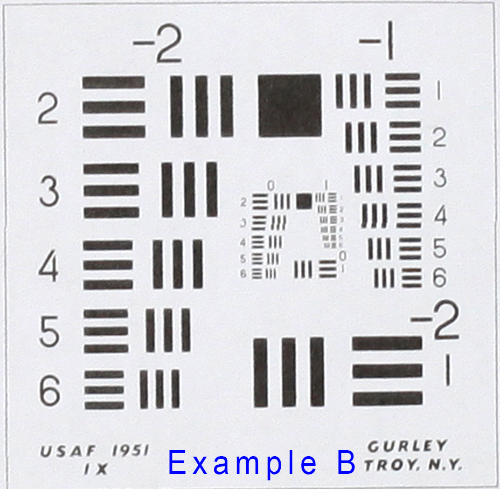
Example B: A significant jump. The edges are crisp, the contrast is higher, and we can clearly see separation down to "Group 1" on the chart.
-
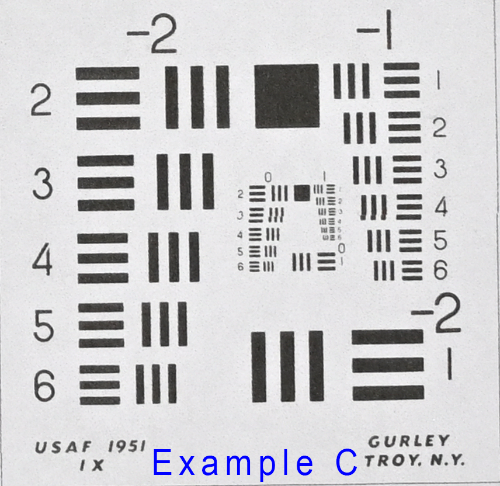
Example C: The gold standard. High contrast, biting edge sharpness, and we can resolve the bars all the way down to "Group 5."
Beyond the Lens
The best part? This isn't just for testing lens sharpness. Use this setup to compare two different camera bodies or find your personal "shake limit" by shooting handheld at different shutter speeds.
Frequently Asked Questions
Why is my lens sharp in the center but blurry on the edges?
Most lenses experience edge softness when shot "wide open" (at their lowest f-number). Stopping down your aperture to f/5.6 or f/8 usually sharpens these corners significantly.
How do I calculate the distance for Crop Sensor (APS-C) cameras?
To ensure the chart occupies the same percentage of the frame as a Full Frame camera, multiply your focal length by your crop factor (1.5x for Sony/Nikon/Fuji, 1.6x for Canon). For a 50mm lens on a Fuji camera, set your distance to 75 inches.
Is a printed resolution chart as good as a professional glass target?
While labs use expensive glass targets, a high-resolution print of the USAF 1951 chart is more than sufficient for identifying the best performing gear in your bag.
Is a it necessary to use a tripod to do this test?
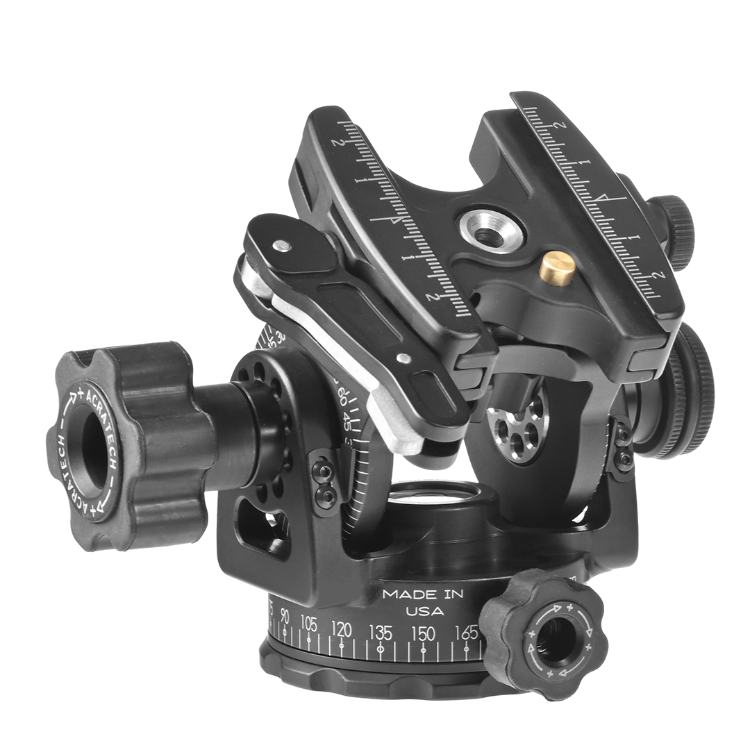
To ensure camera shake and movement are not skewing your results is best to use a solid tripod and tripod Head. We use our Acratech Panoramic Head because it is a very solid supoort even with long lenses. Of course if you are testing your ability to hand hold your camera, you would not use a tripod.